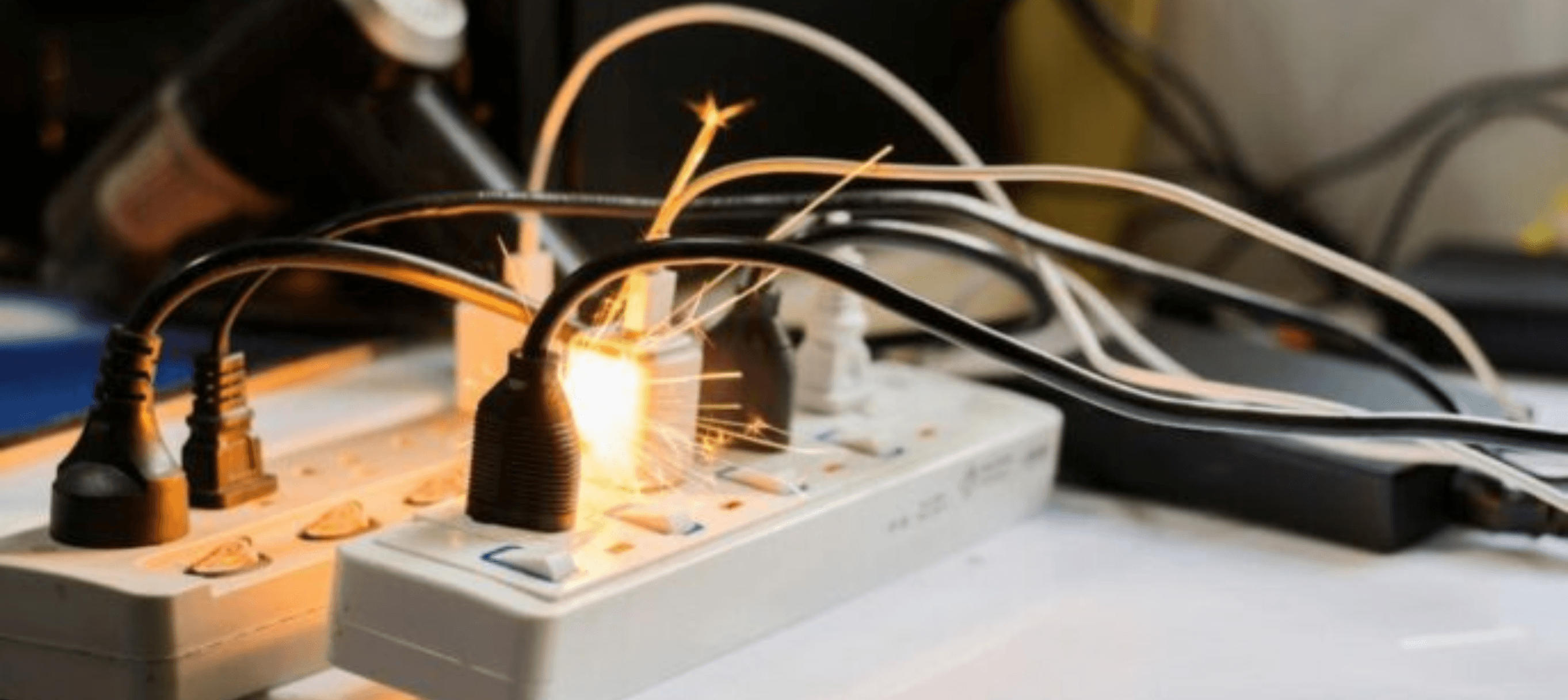

An electrical fault rarely announces itself clearly. It shows up as a circuit that trips the moment you switch something on, a socket that's gone completely dead, or lights that flicker for no obvious reason. Guessing at the cause — or ignoring it — risks making a minor issue into a genuinely dangerous one.
Quick Answer: Is It Serious?
Treat it as urgent if you notice a burning smell, sparking, exposed wiring, or total power loss combined with any burning smell. Simple tripping that resets cleanly once is usually not an emergency — but repeated tripping is a sign something needs investigating.
What Counts as an Electrical Fault
- A circuit breaker or RCD that trips repeatedly and won't reset
- A socket or switch with no power reaching it
- Lights flickering, dimming, or buzzing
- A burning smell with no obvious source
- Intermittent faults that only appear under certain conditions (e.g. when it rains, or when a specific appliance is used)
Common Causes
- Overloaded circuits — too many appliances drawing power through one circuit
- Damaged or aging wiring — insulation breakdown, especially in older properties
- Faulty appliances — a single appliance can trip an entire circuit if it has an internal fault
- Loose connections — often the cause of intermittent faults that are hardest to trace
- Water ingress — a common cause of RCD trips, particularly after heavy rain or in older external wiring
How Professional Fault Finding Works
- Visual inspection — checking the consumer unit, visible wiring, and accessible connections first
- Circuit isolation — testing circuits individually to narrow down where the fault sits
- Insulation resistance testing — using calibrated test equipment to check wiring integrity, not just guesswork
- Load testing — confirming whether the fault is appliance-specific or circuit-wide
Proper fault finding uses calibrated equipment and a systematic process — not simply replacing parts until something works. Our electrical fault finding service starts from £78.00 inc. VAT, fixed price, with same-visit repairs where possible.
When to Call an Electrician Rather Than DIY
- Any fault involving the consumer unit or fixed wiring
- Repeated tripping that returns after resetting
- Any burning smell, even faint
- Faults in bathrooms, kitchens, or anywhere near water
- If you're not confident isolating the circuit safely yourself
Attempting to diagnose faults beyond simple checks (like confirming an appliance is unplugged) without proper testing equipment and training carries real risk — both of misdiagnosis and of injury.
What It Costs
Our electrical fault finding service starts from £78.00 inc. VAT, fixed price, with no call-out fee. If the fault turns out to be a genuine emergency, our emergency response service runs from £156–£210 inc. VAT, also fixed price, with a 60–90 minute response time.
Frequently Asked Questions
How long does electrical fault finding take?
Most domestic fault investigations take around one hour, depending on complexity. Simple faults are often identified and repaired on the same visit.
Is fault finding covered by a fixed price?
Yes — our fault finding service is fixed at £78.00 inc. VAT, not charged hourly, so there's no surprise on the invoice.
What's the difference between fault finding and an emergency callout?
Fault finding investigates and diagnoses a non-urgent issue. An emergency callout is for genuinely dangerous or disruptive faults — total power loss, sparking, or burning smells — and comes with a faster response time.