If you're a landlord and you've heard the term "electrical safety certificate" without being entirely sure what it covers or whether it applies to you, you're not alone — it's one of the most commonly misunderstood landlord compliance requirements in the UK.
What Is a Landlord Electrical Safety Certificate?
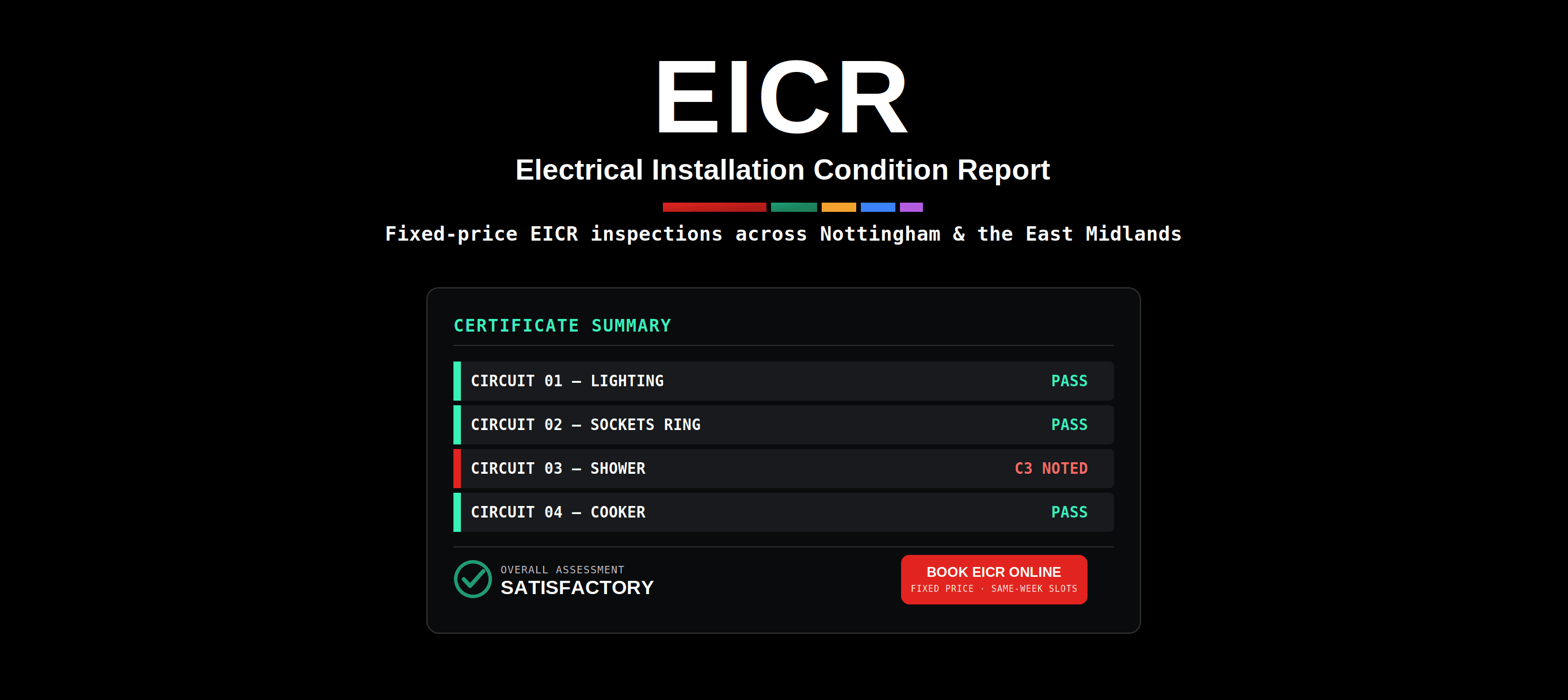
In most cases, this refers to an EICR (Electrical Installation Condition Report) — a full inspection of a property's electrical installation, confirming it's safe and meets current wiring standards. It's sometimes also called a "landlord safety certificate" or "periodic inspection report," but they all point to the same underlying document.
Do Landlords Legally Need an Electrical Safety Certificate?
Yes. Under the Electrical Safety Standards in the Private Rented Sector (England) Regulations 2020, landlords must:
- Have a valid EICR before letting a property
- Renew it at least every 5 years, or sooner if the report specifies
- Provide a copy to existing tenants within 28 days of the inspection
- Provide a copy to new tenants before they move in
- Provide a copy to the local authority within 7 days if requested
How Often Should Landlords Do Electrical Safety Checks?
At minimum, every 5 years — but if your EICR comes back with any C1 or C2 observations, those must be addressed and a follow-up inspection may be required sooner. Nottingham also operates a large selective licensing scheme, meaning an EICR may additionally be required as a condition of your property licence, separate from the national requirement.
What Happens If a Landlord Doesn't Have an Electrical Safety Certificate?
Non-compliance can result in civil penalties of up to £30,000 per breach, and in serious cases, local authorities can take further enforcement action. It's also worth noting that a valid EICR is often expected by insurers — operating without one can affect a claim if an electrical fault causes damage.
Does This Apply to HMOs Too?
Yes, and HMO landlords often face additional scrutiny given the higher occupancy and shared facilities. If you manage an HMO, it's worth combining your EICR with PAT testing for any shared appliances, and confirming your fire alarm system meets the stricter requirements that often apply to multi-occupancy properties.
How Do I Get a Landlord Electrical Safety Certificate?
Book an EICR inspection with a qualified, NICEIC-approved electrician. The inspection assesses your wiring, consumer unit, and protective devices, with any issues coded and explained clearly, and a fixed-price quote provided for any remedial work needed before the certificate is issued.
FAQs
How long does a landlord electrical safety certificate last?
An EICR is generally valid for 5 years for a rented property, though a shorter interval may be recommended if issues are found.
Is an electrical safety certificate a legal requirement for landlords?
Yes, under the Electrical Safety Standards in the Private Rented Sector (England) Regulations 2020.
Do landlords need an electrical safety certificate for every tenancy, or just once?
The same valid certificate covers the property for its full validity period (up to 5 years), not per-tenancy — but a new one is needed if it expires or if significant electrical work is carried out.
What's the difference between an electrical safety certificate and a Minor Works Certificate?
An EICR (safety certificate) is a full condition report on the entire installation. A Minor Works Certificate covers specific smaller jobs, like adding a socket, rather than the whole property.